
Ohio House of Representatives – 62nd District
Biography:
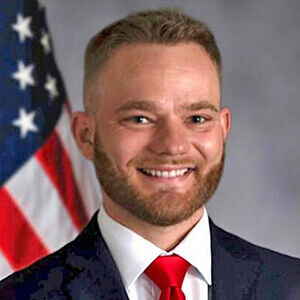
Dillon Blevins is a passionate conservative Republican who grew up in Clermont County (District 62) where he attended Goshen Local Schools K-12 and college in Batavia (UC Clermont) before graduating from Northern Kentucky University with his Bachelor's Degree. He owns and operates a multi-million dollar construction company that provides jobs here in Clermont County. Dillon also serves in the US Army Reserves. Dillon has proven ability to lead and succeed. He will bring energy and integrity to the Statehouse.
Why are you seeking this office, and what motivates you to serve at this time?
Ohio is at a crossroads. For too long, we’ve watched an overgrown government drift further from its purpose, burdening our families and dimming our future. I’m here to address that with a clear mission: to rein in big government, make it serve the people once more, and restore the promise that has defined this nation. We must face an uncomfortable truth: the government has not been honest with us. It has promised prosperity while raising our taxes and expanding its reach. It has assured us of progress while enacting regulations that stifle our businesses and hinder our workers. And it has claimed to represent us, yet too often, it prioritizes its own interests over ours. This betrayal has eroded trust—and it has left the American Dream out of reach for too many.
At the heart of this campaign is a deeper goal: to bring back the American Dream. That dream—where dedication and effort lead to opportunity and security—has been undermined by a government that has lost its way. I envision an Ohio where our children inherit a state of possibility, not one of limitations. Where our entrepreneurs can build without fear of overreach, and our families can thrive without the shadow of excessive taxation. This is not a fantasy—it is a future we can reclaim together.
My commitment to you is solemn and unwavering. I will go to Columbus to reduce the size and scope of government, to lower taxes, and to dismantle the obstacles that stand in your way. I will listen to you, the people of Ohio, and ensure your voices guide my decisions. We have been misled for too long; it is time for a government that reflects our values and respects our rights.
What professional or personal experiences best prepare you to understand the needs of small businesses and employers in Clermont County?
I founded and operate a multi-million-dollar construction company.
I've created good-paying jobs right here in Clermont County.
I deeply understands how burdensome regulations are stifling our economy, driving up costs that ultimately get passed on to hardworking taxpayers.
I will work with fellow Republican Legislators to unleash Ohio’s full economic potential.
What are your top three policy priorities if elected, and what impact do you expect those policies to have on our region?
Cut the state income tax: This proposal would reduce the percentage of income Ohio residents pay to the state, putting more money back in people's pockets for everyday expenses, savings, or investments. It primarily helps working families, small business owners, and middle-class Ohioans by increasing disposable income and stimulating economic growth.
Eliminate property taxes for retirement-aged homeowners: By removing property tax obligations for seniors (typically those 65 and older), this would ease financial strain on fixed-income households, allowing them to afford staying in their homes longer without the burden of rising assessments. It directly benefits elderly Ohioans, retirees, and their families by promoting financial security in later years.
Cut government spending significantly: Ohio's state budget is around $100 billion, with major revenues from income tax ($10-11 billion) and sales tax. Eliminating the income tax would create a $10-11 billion shortfall, while exempting retirement-aged homeowners (65+) from property taxes could add $2-3 billion in state costs to backfill local losses, mainly for schools. This totals a $12-14 billion gap, requiring a mix of cuts, and efficiencies to balance without disrupting core services.
To make up the deficit, we'd need to cut spending in key areas: Reduce welfare options and tighten eligibility. Trim higher education subsidies and eliminate non-core programs such as arts grants and environmental initiatives (which total 4.27 billion). Create government efficiencies, deregulate school/government construction, renovations, and transportation contracts by simplifying bidding, removing burdensome requirements, reducing paperwork, and lowering retainage rates.
Cutting Ohio's state income tax would also spur economic growth by attracting businesses, high earners, and startups, boosting our GDP. This will bring additional revenues to Ohio. Likewise, lowering property taxes for retirement-aged homeowners would retain and draw seniors, stabilizing communities, increasing consumer spending on goods, services, and healthcare, and elevating property values.
What do you see as the most significant economic challenges facing Clermont County over the next four years, and how should government respond?
Clermont County faces its most significant economic challenge in the form of skyrocketing property valuations, which have surged by as much as 43% in recent years, leading to dramatic increases in property tax bills for residents. This escalation burdens citizens, particularly low-income families and seniors on fixed incomes, by straining household budgets, potentially forcing homeowners to sell or relocate, and even translating into higher rents for tenants as landlords pass on costs.
On a broader scale, these rising taxes undermine the county's economy by reducing disposable income available for local spending, deterring potential homebuyers and businesses from investing in the area, and exacerbating inequalities that hinder overall growth and stability.
How will you engage with the business community to ensure that taxes, fees, regulatory structures, and public services support long-term economic growth?
I will do so by lowering taxes, easing regulatory burdens, and fostering robust economic expansion.
Public trust and collaboration are essential in governing. How would you work with colleagues — including those with differing viewpoints — to advance meaningful policy solutions?
Recognizing that diverse perspectives are essential to crafting effective policies that serve all Ohioans, I will prioritize open dialogue, active listening, and constructive compromise to bridge divides and achieve common goals like tax relief and economic growth.
What state-level reforms do you believe are necessary to improve Ohio’s business climate?
By slashing Ohio's state income tax, we can significantly elevate the state's business climate by putting more money directly into consumers' pockets, enabling greater disposable income for spending and investing that fuels everyday economic activity.
If voters approve the elimination of property taxes, what specific steps would you take in the General Assembly to address the resulting impact on funding for local governments, schools, and essential public services?
One option for addressing the budget shortfall is scaling back regulations. For instance, as a construction company owner, I've seen huge cost disparities between public and private projects. Public ones are hampered by excessive rules, letting just a few big firms snag most government work. This has really impacted education: schools get more funding but still seem shortchanged, often needing extra levies. Many schools need renovations and additions, yet costs are ridiculously high. By loosening some regulations to let more firms bid, we could cut expenses, aid small businesses, and extend education funding. Reducing the cost of running schools, which are projected to cost the state $14.6 billion in 2027, would save billions of dollars, and those gains would translate into tax relief for you. I mentioned just one area of regulation (construction) but other areas like transportation also need revamped. Beyond reducing regulations and costs, we can look forward to a robust economy. States like Florida and Tennessee illustrate how dropping state income taxes can fuel job growth, increase spending, and eventually lift tax revenues.
How do you balance state mandates with local control when it comes to economic development and regulatory policy?
The true role of local government is the "advancement of freedom". When local governments act to erode freedom through excessive regulation, state governments have an obligation to intervene.